
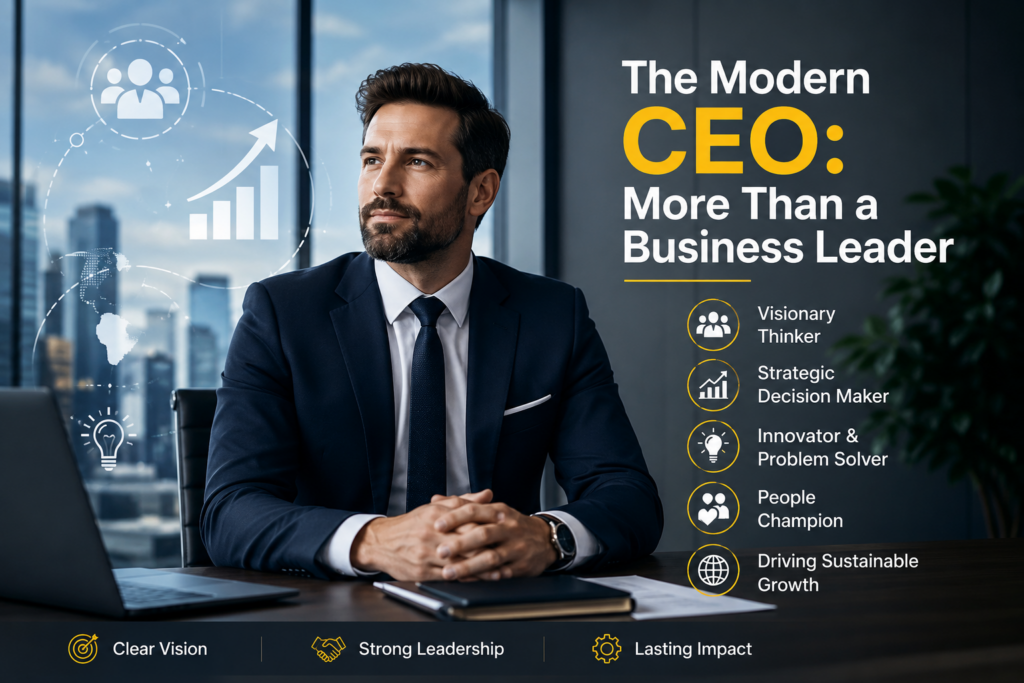
In the past, CEOs focused primarily on financial performance and operational efficiency. Today, they must wear multiple hats. They are strategists, innovators, brand ambassadors, and culture builders.
Modern CEOs are expected to:
- Create a clear vision for the company
- Inspire employees and teams
- Drive digital transformation
- Build strong customer relationships
- Manage risks and challenges
- Promote innovation and growth
- Represent the company in the public eye
The most successful CEOs understand that leadership is not just about giving instructions. It is about empowering people and creating opportunities for success.
The Importance of Visionary Leadership
A company without a clear vision often struggles to achieve long-term success. Visionary CEOs establish goals that inspire employees and provide direction for the entire organization.
A strong vision helps businesses:
- Stay focused on long-term objectives
- Adapt to changing market conditions
- Encourage innovation
- Build customer trust
- Create a competitive advantage
Visionary leaders look beyond today’s challenges and prepare their organizations for future opportunities.
Digital Transformation and the CEO
Technology is transforming every industry. CEOs who embrace digital innovation can improve efficiency, enhance customer experiences, and unlock new revenue streams.
Key areas of digital transformation include:
Artificial Intelligence (AI)
AI helps businesses automate processes, analyze data, and improve decision-making. CEOs who invest in AI technologies gain a significant competitive advantage.
Data Analytics
Data-driven decisions lead to better business outcomes. Modern CEOs rely on analytics to understand customer behavior, monitor performance, and identify growth opportunities.
Cloud Technology
Cloud solutions improve collaboration, reduce costs, and increase flexibility. Many organizations are moving their operations to cloud-based systems.
Digital Marketing
A strong online presence is essential for business success. CEOs must ensure that their companies leverage SEO, social media, content marketing, and online advertising to reach customers effectively.
Building a High-Performance Team
No CEO can succeed alone. Great leaders understand the value of building talented teams and fostering a positive workplace culture.
Strategies for creating high-performing teams include:
- Hiring skilled professionals
- Encouraging continuous learning
- Recognizing employee achievements
- Promoting teamwork and collaboration
- Providing clear communication
- Supporting professional development
When employees feel valued and motivated, they are more likely to contribute to the company’s success.
Decision-Making in Uncertain Times
Business environments are constantly changing. Economic fluctuations, technological disruptions, and global events can create uncertainty.
Effective CEOs make decisions by:
- Gathering accurate information
- Evaluating risks and opportunities
- Consulting experts and team members
- Remaining adaptable
- Focusing on long-term goals
Strong decision-making enables companies to navigate challenges and maintain stability during difficult times.
Customer-Centric Leadership
Customers are at the heart of every successful business. CEOs who prioritize customer satisfaction build stronger brands and achieve sustainable growth.
Customer-focused strategies include:
- Listening to customer feedback
- Improving products and services
- Delivering exceptional experiences
- Building trust and transparency
- Creating personalized solutions
Businesses that put customers first often outperform their competitors.
Innovation as a Growth Strategy
Innovation is one of the most powerful drivers of business success. CEOs must encourage creativity and embrace new ideas.
Innovative companies often:
- Invest in research and development
- Explore emerging technologies
- Encourage experimentation
- Learn from failures
- Continuously improve products and services
Innovation helps organizations stay relevant and adapt to changing market demands.
Essential Qualities of Successful CEOs
The world’s most respected CEOs share several common characteristics:
Strong Communication Skills
They communicate clearly with employees, customers, investors, and stakeholders.
Strategic Thinking
They focus on long-term growth while managing short-term challenges.
Adaptability
They embrace change and respond effectively to new opportunities.
Integrity
They build trust through honesty, transparency, and ethical leadership.
Resilience
They remain focused and determined even during difficult situations.
The Future of CEO Leadership
As technology continues to evolve, the role of the CEO will become even more dynamic. Future leaders must be digitally savvy, customer-focused, and committed to continuous learning.
The CEOs who succeed in the coming years will be those who embrace innovation, empower their teams, and create value for customers and stakehol
A strong digital presence helps businesses:
- Build brand credibility
- Reach new customers globally
- Generate qualified leads
- Increase sales and revenue
- Improve customer retention
- Gain valuable market insights
The CEO’s Role in Marketing Strategy
Successful CEOs don’t manage every marketing campaign, but they provide direction and support. Their role includes:
Setting Clear Business Goals
Digital marketing should align with company objectives. Whether the goal is increasing revenue, expanding into new markets, or building brand awareness, marketing efforts must support the broader business vision.
Investing in Technology
Modern marketing relies on data analytics, automation tools, artificial intelligence, and customer relationship management systems. CEOs who invest in the right technology create a competitive advantage.
Building a Customer-Centric Culture
Customers are the foundation of every successful business. CEOs should encourage teams to focus on customer needs, preferences, and feedback to create better experiences.
Top Digital Marketing Trends CEOs Should Watch
Artificial Intelligence (AI)
AI is transforming marketing by improving customer targeting, content creation, and campaign optimization. Businesses using AI can make faster and more informed decisions.
Video Marketing
Video continues to dominate online engagement. CEOs should encourage their brands to create educational, promotional, and storytelling videos to connect with audiences.
Personalization
Consumers expect personalized experiences. Companies that deliver relevant content and offers are more likely to build customer loyalty.
Data-Driven Decision Making
Successful businesses use analytics to understand customer behavior and improve marketing performance. Data helps CEOs make smarter strategic decisions.
Leadership Lessons for Digital Growth
Great CEOs understand that marketing is an investment, not an expense. They focus on long-term brand building while also driving short-term results.
Key leadership principles include:
- Embrace innovation
- Encourage creativity
- Measure performance regularly
- Focus on customer value
- Adapt quickly to market changes
Common Mistakes CEOs Should Avoid
Many organizations struggle because leadership makes avoidable marketing mistakes:
- Ignoring digital transformation
- Underestimating SEO importance
- Focusing only on short-term sales
- Neglecting customer experience
- Avoiding data analysis
By avoiding these mistakes, CEOs can create sustainable business growth.
The Future of CEO-Led Marketing
The future belongs to leaders who combine business strategy with digital innovation. CEOs who understand online marketing can guide their organizations through changing market conditions and emerging technologies.
Digital marketing is no longer just a department—it is a business growth engine. Companies with visionary leadership and strong digital strategies will continue to thrive in the years ahead.
Conclusion
A successful CEO recognizes that digital marketing is essential for growth, customer engagement, and brand leadership. By embracing technology, focusing on customer needs, and investing in innovative marketing strategies, business leaders can position their organizations for long-term success.
The most successful CEOs of 2026 will not simply manage businesses they will lead digital transformation and create lasting value for customers and stakeholders alike.