
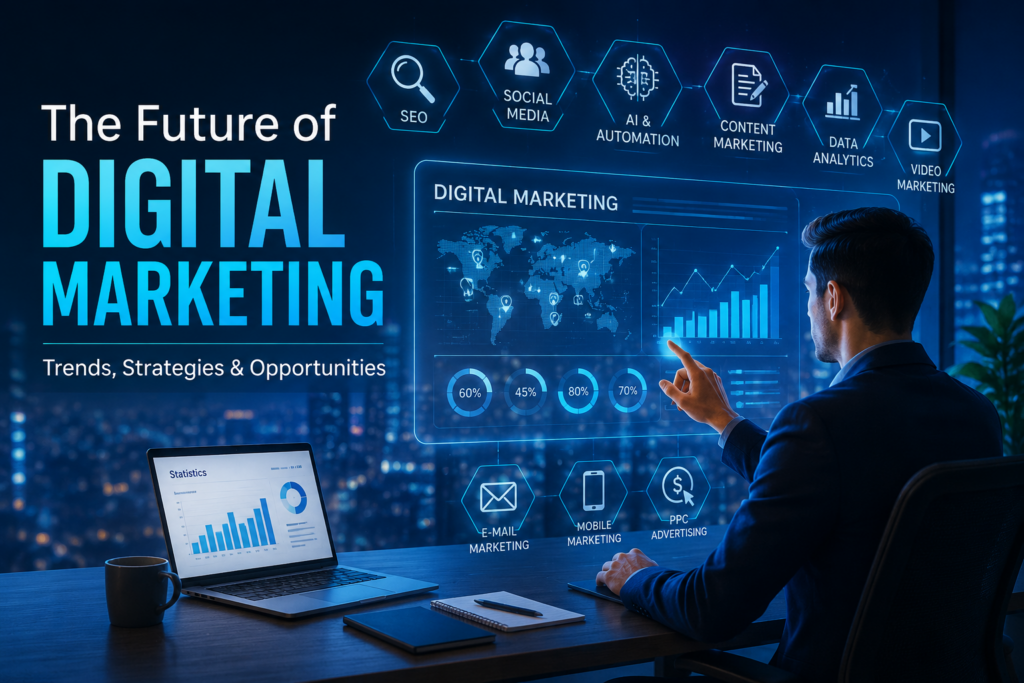
Digital marketing continues to evolve rapidly as technology advances and consumer behavior changes. Emerging trends such as artificial intelligence, voice search, personalized marketing, and automation are transforming the way businesses connect with customers. Companies that embrace these innovations can improve customer experiences and achieve better marketing results.
The future of digital marketing will focus heavily on personalization and data-driven decision-making. Businesses will use advanced analytics to understand customer preferences and deliver highly targeted content. Video marketing, influencer collaborations, and interactive experiences will also continue to grow in importance. As the digital landscape becomes more competitive, businesses must stay updated with the latest trends and technologies to remain successful. Investing in modern digital marketing strategies today will help businesses thrive in the future.
How Google Ads Can Grow Your Business
Google Ads is one of the most powerful online advertising platforms available today. It allows businesses to display advertisements to users who are actively searching for specific products or services. By targeting relevant keywords, businesses can reach potential customers at the exact moment they are interested in making a purchase.
Google Ads offers flexibility, allowing businesses to set budgets, target locations, and measure performance accurately. Campaigns can generate immediate traffic and leads, making them ideal for businesses looking to achieve quick results. With proper keyword research, compelling ad copy, and effective landing pages, Google Ads can significantly increase visibility and revenue. When managed correctly, it provides an excellent return on investment and helps businesses achieve their marketing goals efficiently.
Types of Digital Marketing and Their Importance for Business Growth
In today’s digital world, businesses need a strong online presence to succeed. Digital marketing has become one of the most effective ways to reach potential customers, increase brand awareness, and drive sales. Unlike traditional marketing, digital marketing allows businesses to connect with their target audience through various online channels.
Search Engine Optimization (SEO) is one of the most popular forms of digital marketing. SEO helps websites rank higher on search engines like Google, making it easier for customers to find businesses online. Higher rankings often lead to increased website traffic and better business opportunities.
Social Media Marketing (SMM) is another essential digital marketing strategy. Platforms such as Facebook, Instagram, LinkedIn, and YouTube enable businesses to engage with customers, share valuable content, and build strong relationships with their audience.
Pay-Per-Click (PPC) advertising allows businesses to display ads on search engines and social media platforms. Companies only pay when users click on their advertisements, making PPC a cost-effective way to generate leads and sales.
Content Marketing focuses on creating valuable and informative content such as blogs, articles, videos, and infographics. High-quality content helps businesses establish authority in their industry and attract potential customers.
Email Marketing remains one of the most powerful digital marketing techniques. Businesses can send personalized emails to customers, promoting products, services, and special offers while maintaining customer relationships.
Affiliate Marketing involves partnering with individuals or organizations that promote products and services in exchange for a commission. This strategy helps businesses expand their reach and increase sales.
Influencer Marketing has gained popularity in recent years. Businesses collaborate with influencers who have large and engaged audiences to promote their products and services.
Video Marketing is highly effective because video content attracts attention and increases engagement. Businesses use videos to educate customers, showcase products, and strengthen brand identity.
Mobile Marketing targets users through smartphones and tablets. Mobile-friendly websites, SMS campaigns, and app-based promotions help businesses reach customers wherever they are.
Online Reputation Management (ORM) helps businesses monitor and improve their online image. Positive reviews and customer feedback can significantly impact a company’s success.
Digital marketing offers numerous benefits, including increased visibility, better customer engagement, higher conversion rates, and measurable results. Businesses can track performance and optimize campaigns for maximum effectiveness.
As technology continues to evolve, digital marketing will remain a key factor in business growth. Companies that invest in digital marketing strategies can stay competitive, reach larger audiences, and achieve long-term success in the online marketplace.
. Search Engine Optimization (SEO)
Search Engine Optimization, commonly known as SEO, is the process of improving a website’s visibility on search engines such as Google. When users search for products or services related to your business, SEO helps your website appear higher in search results.
Benefits of SEO:
- Increases organic website traffic
- Improves brand credibility
- Generates long-term results
- Enhances user experience
- Increases conversion rates
SEO includes keyword research, on-page optimization, technical SEO, content creation, and link building.
2. Social Media Marketing (SMM)
Social Media Marketing involves promoting your business through platforms like Facebook, Instagram, LinkedIn, Twitter, and YouTube. Social media helps businesses connect directly with customers and build strong relationships.
Benefits of Social Media Marketing:
- Builds brand awareness
- Engages with customers
- Increases website traffic
- Generates leads and sales
- Enhances customer loyalty
A successful social media strategy includes regular posting, audience engagement, content creation, and paid advertising campaigns.
3. Pay-Per-Click Advertising (PPC)
PPC is a form of online advertising where businesses pay each time a user clicks on their advertisement. Google Ads is one of the most popular PPC platforms.
Benefits of PPC:
- Instant website traffic
- Highly targeted audience reach
- Measurable results
- Flexible budgeting
- Increased lead generation
Businesses can target specific keywords, locations, demographics, and customer interests to maximize results.
4. Content Marketing
Content Marketing focuses on creating and distributing valuable content to attract and engage potential customers. Content can include blog posts, articles, videos, infographics, ebooks, and case studies.